
🧑🎓 Study Abroad Interviews, 🌍 Study Abroad, 📄 Application Essays, 📝 Applications
Five MSE Offers: How Victor Got Into UCLA, UMich, UCSD, Purdue, UIUC
Updated 2026/10/16
Jason’s Memo
Victor received offers from five US master’s programs in materials science and chose UIUC. Here is how he applied:
- Plan early: He set his goal of studying abroad in his first year, then took TOEFL classes, served as president of his department’s student association and did an internship. Get language tests done as early as you can.
- Turn your documents into a story: His SOP starts with his interest in organic chemistry in his second year and moves to taking an organic materials course and researching self-healing materials in a lab in his third year.
- Choosing schools: He compared himself with applicants from similar backgrounds on Dcard and OfferLand to sort dream schools from safety schools, then looked at courses and professors’ research areas.
With a GPA of 3.95/4.3 and several research and internship experiences, Victor was admitted to master’s programs in Materials Science & Engineering (MSE) at several top US universities, including UCLA, UMich, UCSD, Purdue and UIUC. He chose UIUC for graduate school. In this interview, Jason looks at how Victor kept up strong research while handling a heavy course load and military academy training, and how an internship at the National Chung-Shan Institute of Science and Technology (NCSIST), an undergraduate project on hydrophobic coatings and a CubeSat mission design competition gave his application its distinctive strengths.
The interview covers why he applied, how he chose schools, how he presented his research and internship experience, and how he balanced coursework with application prep under pressure. Victor’s story shows how STEM students can make their applications more competitive and offers practical tips along the way.
If you’re preparing to apply for a STEM master’s in the US, such as materials science, chemical engineering or nanotechnology, and you feel unsure about your GPA, your research experience or how to show your strengths, this interview is a useful case to study.
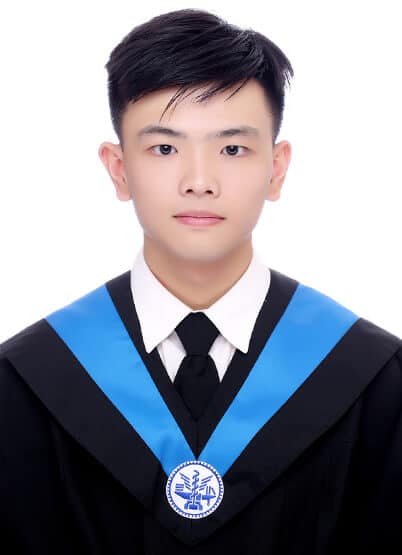
Victor’s application background:
National Defense University, Department of Chemical and Materials Engineering / National Yang Ming Chiao Tung University (NYCU), Department of Systems Engineering, GPA: 3.95/4.3
TOEFL 93
Work Experience: Intern, Materials and Electro-Optics Research Division, National Chung-Shan Institute of Science and Technology
Research / Projects:
- Research project on self-healing, recyclable hydrophobic coating materials (presented at a conference)
- Study of negative electrode materials for lead-carbon batteries (independent research)
- Taiwan Space Agency CubeSat mission design competition (materials and chemical design)
Other Experience:
- Training officer, internship camp, National Defense University
- Acting deputy platoon leader (cadet), National Defense University
- President, Department of Chemical and Materials Engineering Student Association, National Defense University
Admissions:
- UIUC, MS Material Science & Engineering (enrolled)
- UCLA, MS Material Science & Engineering
- UCSD, MS Material Science & Engineering
- University of Michigan, MS Material Science & Engineering
- Purdue University, MS Material Science & Engineering
About the UIUC MS in Material Science & Engineering
The University of Illinois Urbana-Champaign (UIUC) is a world-renowned public research university in Illinois. It is a member of the Big Ten, the Big Ten Academic Alliance and the Association of American Universities (AAU), and is often called a “Public Ivy.” Its Master of Science in Materials Science and Engineering (MSE, official site) is offered by the Grainger College of Engineering. The curriculum combines theory and lab work and aims to train people who can drive innovation in fields such as energy, semiconductors, biomedicine and sustainable materials.
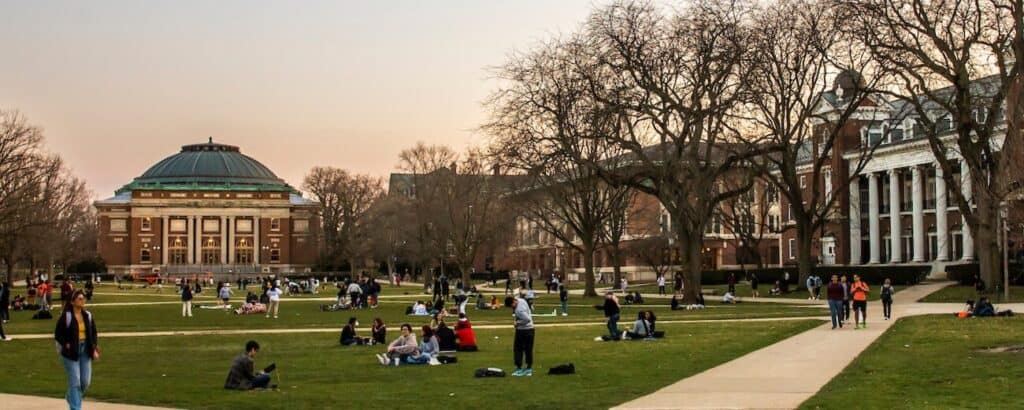
The MSE master’s takes about 1.5 to 2 years and has two tracks: Thesis (32 credits) and Non-Thesis (36 credits). Students must take at least 14 credits of 500-level advanced courses and participate in the Materials Colloquium (MSE 595) and professional seminars (MSE 529, MSE 559). Core courses include Thermodynamics of Materials, Synthesis of Materials, Biomaterials, Atomic-scale Simulations and Materials Design Thinking, giving students a grounding in theory, advanced lab techniques and cross-disciplinary applications.
On careers, UIUC’s data on master’s graduates from 2014 to 2021 shows 69% went into industry, 19% continued in academia, 10% went into other fields and 2% joined national laboratories. Common employers include Intel, Corning, Micron, BASF, Johnson & Johnson and Lockheed Martin, as well as research institutions such as Los Alamos National Laboratory. Students who went on to a PhD attended leading research institutions including Johns Hopkins, the University of California system, Michigan and Penn State.
Overall, UIUC MSE balances theory and practice in its curriculum, and its industry partnerships and broad alumni network give students strong career support. For students who want to combine a STEM background with industry applications, it’s an attractive option for quickly building research skills and job market competitiveness.
Why he applied: from military academy to materials science
What made you decide to apply for a materials science and engineering master’s abroad? How did your dual degree at National Defense University and NYCU shape that choice?
I’d always been drawn to studying abroad, and receiving a scholarship from the National Chung-Shan Institute of Science and Technology made me decide to apply for a materials science and engineering master’s overseas. I feel the military training at National Defense University built up my patience and my tolerance for setbacks, both mentally and physically. At National Defense University I also got exposure to military technology that students at other universities don’t see. For example, we took courses on explosives.
NYCU gave me great library resources and a network. I’m also very grateful to Professor Chao-Yao Yang in NYCU’s Department of Materials Science, who gave me a lot of advice on my applications and wrote me a recommendation letter.
During your time at the military academy and in research, was there a turning point or moment of inspiration that made you more certain about going abroad for graduate school? What do you hope to achieve by studying abroad?
While I was in school, I often heard teachers who had studied abroad talk about research overseas. The large libraries, the equipment and the huge alumni networks at foreign universities are very different from what you find in Taiwan.
Also, a lot of research and publishing happens first overseas. So I wanted to do graduate study abroad, both to experience life there and to have a chance to take part in research where it’s happening.
You have a lot of leadership, research and competition experience from college. Did you plan in advance what you wanted to achieve each year?
Yes. Not long after starting my first year, I had already set my goal of studying abroad. So in the summer after first year I took TOEFL classes, from second year into third year I served as president of the department student association, and in the summer before senior year I did an internship. It all went according to plan.
Application documents: showing both research and leadership
How did you plan the logic and focus of your SOP and essays? Among so many STEM applicants, how did you make your strengths stand out?
I think the most important thing in an SOP, essay or any other application document is to connect all your experiences into a compelling story aimed at getting into your dream school and program.
I’m very grateful to Jason for his help here. He worked with me to connect my internship, competitions and undergraduate project and bring out my strengths.
What set me apart from other applicants was my military academy experience. The dual degree from the military academy and NYCU built my resilience and also gave me access to one of Taiwan’s top academic environments. That’s what I tried hardest to highlight in my application documents.
When planning your documents, how did you pick what was most suitable and worth including, and how did you link each experience into a logical story?
Everyone has lots of different extracurricular activities and academic achievements, so I think you have to make choices based on how much space the documents give you.
I’d build it as a story: start with small activities that show your interest in a field, then use mid-sized academic or extracurricular activities to show how you settled on that field, and end with in-depth research.
In my SOP, for example, I became interested in organic chemistry through my second-year organic chemistry course. In third year I took an organic materials course and narrowed my interest to polymer materials, and in my third and fourth years I joined a lab, researched self-healing polymer materials and took part in related conferences.
Any tips or lessons for writing your CV?
A CV has limited space, so you need to pick the activities that are most representative or that matter most for the program you’re applying to!
There are also lots of small details to watch in a CV. Font size and line spacing really matter. I spent a long time discussing this with Jason before we arrived at the final version.
Did you reach out to upperclassmen or teachers for help with your applications or documents? And are there any resources or platforms you’d recommend for preparing to study abroad?
Yes. I asked many upperclassmen in my department about applying abroad, and I also consulted many teachers in my department and at other schools and asked them to write recommendation letters. I’d like to take this chance to thank all the teachers and upperclassmen who helped me along the way.
As for teachers from other schools, I got to know Professor Chao-Yao Yang at NYCU by taking his class, and through my family I met Professor Snow from the Department of Electrical Engineering at National Taiwan University. Both professors helped me enormously with recommendation letters, choosing schools and more.
Application strategy and choosing a school: from several top offers to UIUC
How did you plan your application timeline? How did you research schools and put together your list of programs?
I think you can get TOEFL and the GRE out of the way in your first and second years. The sooner you finish language tests the better, and then you can focus on extracurricular and academic experience.
You can start preparing your CV, SOP and other documents and researching your school list around July or August. I looked on Dcard, OfferLand and similar sites to see which schools applicants with similar backgrounds got into, and built my list from that.
Did you mix dream schools and safety schools? What did you consider when ranking them?
Yes. I based it on my own profile. If you compare yourself with applicants from similar backgrounds on Dcard or OfferLand, you can roughly work out which schools are dreams and which are safeties.
Besides rankings, my biggest factor was the courses and the professors’ research areas. I’m interested in polymers, so naturally I chose schools with a strong focus on polymer research. I’ve also found that searching ChatGPT with good keywords can turn up surprisingly useful information.
You received offers from UCLA, UMich, UCSD, Purdue and other top schools. Why did you choose UIUC in the end?
UIUC has a lot of resources and ranks quite high in materials. The cost of living there is lower than in many other places, and the professors’ research areas were another factor I considered.
One tip for other applicants: check Reddit and other platforms to see what people say about the school. Look at whether your department is big within the university, whether it’s well funded, how many students it has and so on, and use that to help you decide.
Advice for future applicants: preparing academically and mentally
If you could go back to the start of the process, what three things would be most worth starting early?
- Language tests
- Finding friends with the same goal to work alongside (doing it alone is lonely!)
- Taking part in academic and extracurricular activities
What advice would you give younger students who want to apply for a STEM master’s? (Academics, building experience in college, or application tips)
I don’t think you should shy away from dream schools because of your language scores, or spend lots of time chasing a higher score. Use that time to build up your experience instead.
I’d also suggest trying to do your graduate applications yourself. I did mine on my own without an agency, and it didn’t take that much time. It saves money and builds your independence too.
One more thing: once you’ve set your goal of studying abroad, don’t be afraid to share it. Find like-minded friends to work toward it together. Look on Dcard for people who want to team up. Above all, don’t be afraid to ask teachers, upperclassmen or people online for advice. People who have been through the study-abroad process were helped by many others along the way, so they’re usually happy to pass on what they learned to the next person with a dream!
Jason’s Takeaway
Victor’s advice: don’t let language scores scare you away from dream schools, and don’t spend lots of time chasing a higher score. Put that time into building your experience.
Jason, admitted to Columbia Business School’s MBA at 22 and founder of OfferLand.cc
Next step: Find applicants with similar backgrounds on Dcard or OfferLand, look at where they were admitted, and list your dream and safety schools.
