
🌍 Study Abroad, 📄 Application Essays, 📝 Applications, 🧑🎓 Study Abroad Interviews
From Advertising to Data: How Amity Got into NUS Marketing Analytics
Updated 2026/10/16
Jason’s Memo
Amity moved from an advertising background into NUS’s master’s in marketing analytics, and what got her there was the data analysis she had actually done during her internship.
- Ask for the work: Her role was in marketing, but she still asked her manager to let her design and analyze a product satisfaction survey. At the time she only used Excel.
- Be selective: Don’t cram every experience into your application essays. Think about what the school wants to see and keep only the best parts.
- Leave room in the interview: When discussing her internship, she first covered the survey’s outline, the analysis method and the results, left room for the professor’s follow-up questions, then offered more detail herself.
Amity went from a double major in Advertising and Business Administration at National Chengchi University to the National University of Singapore (NUS) master’s program in Marketing Analytics and Insights, completing what looked like a long-shot switch from humanities to a quantitative program in one year. She joined ASUS ROG, one of the world’s top five gaming brands, as a product marketing assistant, and through marketing projects she came to see that every successful ad is driven by data and business strategy. That cemented her decision to pursue a master’s in analytics.
In this interview, I go through Amity’s whole application: how she decided only in April or May to give up on Taiwanese graduate school and apply abroad; how she shortlisted schools and prepared her application essays and interviews on a tight timeline; and how she used her advertising background to convince a data-driven master’s program to admit her. If you’re considering a master’s in Singapore, a program in Marketing Analytics or Business Analytics, or want to understand the real challenges and advantages of studying in Singapore and switching fields, you’ll find practical strategies here.
Amity’s background (Instagram):

National Chengchi University, Advertising with a double major in Business Administration, GPA: 3.94/4.3
IELTS 7.5
Work Experience:
- ASUS ROG Product Marketing Assistant, 1 year (one of the world’s top five consumer electronics and gaming hardware companies)
Other Experience:
- National ACT Dreamer ESG Impact Project, 1st place (a sustainability business project for one of Taiwan’s three largest telecom companies)
- Several academic research projects in marketing and data analysis (K-POP consumer behavior, phone case brand preferences)
- Heineken Taiwan Business Contest finalist (Group Leader)
- Youth City Forum Hackathon, 2nd place (Group Leader)
Admitted to:
- National University of Singapore, MSc Marketing Analytics and Insights (enrolled)
- University of Manchester, MSc Business Analytics: Operational Research and Risk Analysis
- University of Warwick, MSc Business Analytics
- University of Bristol, MSc Business Analytics
About the National University of Singapore (NUS) MSc in Marketing Analytics and Insights
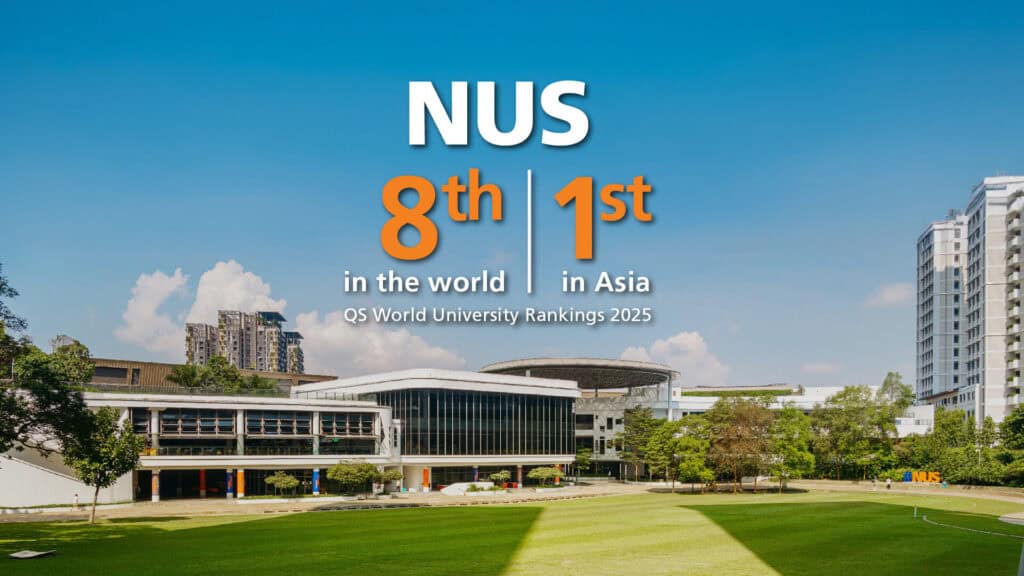
The National University of Singapore (NUS) sits at the center of Asian finance and technology and is one of the world’s leading research universities. In the QS World University Rankings 2026, NUS ranked 8th in the world for the third year in a row and remained 1st in Asia. Its business school, NUS Business School, ranked 12th in the world in the QS Masters in Management Rankings 2023 and is known for rigorous academics, deep research on Asian markets and strong industry ties around the world, and has long trained business leaders with a global outlook and practical skills. The school’s MSc in Marketing Analytics & Insights (MAI, official site) trains people who combine marketing strategy with data analysis and can use data to guide market decisions and brand development.
MAI is an intensive three-semester program that can be completed in 12 to 15 months. It is compact and practice-oriented. The curriculum includes preparatory marketing foundations, five core analytics courses (such as Big Data, Consumer Insights, Digital Marketing, Marketing Analytics, and Visualization & Communications), four electives (such as AI in Marketing, Pricing Analytics, and Python Programming for Marketing Analytics), and a credit-bearing practical project (Industry Internship, Marketing Analytics Project or Venture Challenge). The program combines theory with tools and puts particular weight on R, Python, statistical modeling and data visualization, so students learn to bring analytical thinking and hands-on skills to marketing strategy.
Most graduates go into consumer goods, consulting and market research, retail, media and ICT, in roles such as Marketing Manager, Product Manager, Business/Data Analyst and Consultant. According to Singapore’s official Graduate Employment Survey, the overall employment rate for NUS graduates is generally above 90%, and the average for graduate business programs reaches 97%.
The median monthly salary of MAI graduates is about SGD 4,600 (about TWD 108,600), and annual salaries for marketing and data roles mostly fall between SGD 50,000 and 90,000 (about TWD 1,180,000 to 2,124,000). A Brand Manager, for example, earns the equivalent of about TWD 1.416 to 2.124 million a year, and a Digital Marketing Specialist about TWD 1.18 to 1.88 million. The program also offers a CEMS MIM double degree. With its mix of theory, practice and international resources, it is a strong choice for anyone who wants to go deep in marketing analytics and get into the workforce quickly.
Motivation and switching fields: from advertising creative to marketing data
With a double major in advertising and business plus a year as a marketing assistant, what made you move into data analysis?
I felt that ads and marketing pitches take a lot of manpower, yet their impact is hard to measure.
An ad might take days to shoot and go through endless rounds of revisions, but who can say how many people actually see it? Or how many of them end up buying the product because of it?
As a student I was also surrounded by wildly creative classmates, and it seemed a shame that their ideas might never be seen. So while everyone else focused on planning and creative work, I cared more about whether an ad reached the right people, because that’s how it has the biggest effect. In the age of big data, that naturally leads to data analysis. Only precise, data-driven consumer targeting and ad placement can get the most out of advertising and marketing.
How did you build up your technical skills, such as R, Python and statistics?
I took the full statistics sequence in my first and second years. I had taken courses in Python and R, but I’d describe my software skills as a light taste at best. My program didn’t require these programming skills to apply, so I tested the waters with online courses (Coursera / DataCamp). All I can say is that you really do need lots of practice to get good at it!
Besides the background above, what past experiences helped your career or studies?
My advertising degree gave me a lot of pitching experience (basically at least two courses a semester involved it). It doesn’t come with a title, but it meant a lot to me. It showed me the value of marketing and advertising to brands and companies and confirmed through hands-on work that I was interested in this field. It also made me realize that the classic communication-school skills, like graphic design and video editing, and the data research, planning and integration skills I picked up later, can be used beyond marketing and advertising and combined with other fields. I started to feel I might have more options than pure marketing and advertising.
(Anyway, I’m really grateful to my College of Communication! Thanks to my department for giving students so much room and time to experiment, and I encourage everyone to try lots of things. Back then I never imagined I’d end up in a master’s program involving programming and data, haha.)
Right now I work part-time running a social media account and as an assistant at a design studio. In the first job I apply what I’m learning in class and try to run the account in a more data-driven, systematic way. In the second I’m learning to work and communicate with clients, and I help with some design tasks. The two jobs look scattered and completely unrelated, but I value the chance to build different kinds of skills.
Essays and résumé: how a creative background convinced a data-driven program
In your SOP and essays, how did you tie “advertising creative” and “data analysis” into one convincing story?
Good advertising needs precise consumer targeting, and that inevitably depends on data analysis. Thanks to all the pitches I did as a student, I had a lot of experience with market research and analysis. Whatever the scale, it let me show the schools convincingly that I’m genuinely interested in marketing analytics and enjoy it. During my internship I also asked my manager to let me design and analyze a product satisfaction survey, applying what I’d learned at work, which showed my enthusiasm for the field even more.
We heard you first wanted to include every experience. How did you narrow them down to what the schools needed?
At first I really did want to tell my whole story, but I found it became too scattered and too long. When I switched perspective and asked what the school would want to see in a student, I could cut a lot of unnecessary content.
In your résumé and essays, how did you show your skills in statistical software and data analysis so admissions officers would believe you could switch fields?
Real application is what convinces people most, so I think the data analysis I did during my internship counted for a lot (even though I only used Excel at the time). My role was just marketing, but there were still plenty of chances to try data analysis if I asked: our regular social media metrics, EDMs, or asking whether I could design a user satisfaction survey. I also took related courses (Python / SPSS) and showed on my résumé that I was learning these tools. I think schools care more about your enthusiasm and potential to learn than about how proficient you already are.
Planning and choosing schools: deciding fast and targeting precisely
Why did you switch from Taiwanese graduate school to a master’s abroad? How do they differ for career changers (e.g. portfolio requirements, the divide between humanities and science tracks)?
In Taiwan, moving into data analysis from the humanities and social sciences track is still quite hard. Whether through recommendation-based admission or entrance exams, programs now favor applicants from the same or related majors with solid relevant experience. Of course, coming from that track, we also struggle to compete with classmates who have spent four years in the field, and there are fewer programs to choose from.
To be honest, I never wanted to become a programming or computer science expert. I just wanted to master the tools to help me reach my goals, and I know a job that’s 100% programming isn’t for me. Taiwanese education leans toward specialization and has few programs that sit in between like this, which was the main reason I looked abroad, where there are more options of this kind.
For applications, as I said above, business programs that aren’t entirely focused on programming and data care more about a student’s enthusiasm, potential and relevant experience than proficiency. Compared with applying in Taiwan, I thought applying abroad gave me an advantage and let me study what I wanted to learn.
You planned to take Taiwan’s graduate entrance exams and only decided in April or May to apply abroad. How did you plan your timeline, and how did you shortlist schools and prepare essays and interviews in so little time?
My first decision was to go all-in on IELTS. I was still going to classes and doing my internship, so I gave myself three months to prepare for the English test. Many UK schools actually let you submit test scores later, but I felt English ability was part of showing my potential, so I wasn’t comfortable applying without taking it first, haha.
Students applying to the UK may not need to rush like I did. Plenty of people submit scores later and still get in.
After my internship ended in June, I started on my essays. At first I had no idea what I was doing and wrote a really bad one… I’m very grateful for Jason’s strong support later on (I’d suggest reading through Jason’s guides and getting clear on what you want to say before you start writing). Even with the tight schedule, I made the UK first-round submissions in October. If you’re planning to study abroad, take your tests early and think early about which skills you need to build. You’ll probably be much less rushed than I was.
When comparing NUS, Manchester, Warwick and Bristol, which program features, career resources or living conditions mattered most to you?
I find it hard to get into pure theory or reading, so I was looking for programs with real cases to work on and analytics tools like data visualization. That builds hard skills and lets you apply what you learn to real business situations.
For career resources, I looked into how each department or school supports students, such as whether there are company projects, how the career center coaches students, and how many internship and job resources are available.
As for living conditions and location, I’m quite open to different lifestyles and can adapt to any city. But you need to be clear about your end goal first. If you want to stay and work locally, the school’s career resources and the local job market matter a lot. And Singapore is close to Taiwan, which feels really convenient!
What features or resources made NUS MAI the best choice for you?
NUS MAI matched what I set out to do in the first place: its curriculum is built around data analysis for marketing. So far there’s quite a lot of analysis and programming, which lets me learn some of the hard skills I really wanted (Python, R and practical statistical analysis methods), so I can run data analysis, make charts and draw insights on my own.
Another feature that drew me in is that it offers credit-bearing internships, so we can intern in Singapore for several months and apply what we learn in class to real industry work. The teaching is also application-oriented. It goes beyond theory and uses cases to train thinking and execution.
Research and connections: applying on your own
Information on studying in Singapore is relatively scarce. How did you find reliable sources to plan your application?
Singapore’s application process isn’t very complicated, and if you follow the official website you won’t have big problems. For details like the interview process, interview questions, professors and courses, I searched on Xiaohongshu (a lot of Chinese students have applied to Singapore over the years). In Taiwan, I also checked forums for people who had applied to the same program and politely contacted them directly for information.
I was also pleasantly surprised to find many successful Singapore application cases on OfferLand, and through Jason I met a senior student from the same program, which helped a lot. Many thanks to the platform and to Jason!
What concrete help did connections and platforms like OfferLand and Jason give you during the application?
Jason helped me a lot with my documents. He improved how I described my experiences and showed me that you don’t narrate an experience from start to finish; you present its best parts (the process and results the school cares about). And as I said above, you don’t need to dutifully list every experience. Keeping the best and framing it a little made experiences I thought were ordinary suddenly look impressive. Often it’s just a matter of how you tell it, so getting help from someone experienced really matters.
Jason also connected me with a senior student in the same program, so I could ask more in-depth questions about it. The networking help was great too!
Interviews: showing your value in limited time
Which schools interviewed you? What was distinctive about the UK and NUS interview formats and questions?
In the UK, basically only the G5 schools interview, using recorded videos. But UCL kept me waiting until April of the following year and then rejected me, so my preparation may not be much of a reference.
(Still, from my own reflection and from seeing how others in my cohort did online, UK schools seem to like more ambitious answers where you’re willing to paint a big vision. Don’t play it too safe.)
The NUS interview had two parts. One covered motivation and career, standard questions like why you want to come and whether you plan to stay and work in Singapore. The other was about the subject itself. From what classmates recall, some were asked marketing questions. My interview focused on the data analysis I did during my internship (they really like hands-on experience). I also took the initiative to spend some time explaining my survey design in detail, which seemed to use up the time, and I got asked fewer questions.
They also look at your transcript a bit, so prepare something to say about any courses that look related or are finance-related, because they may ask. I was asked about one, a fintech course that had nothing to do with marketing, and luckily I’d prepared, haha.
You mentioned taking the lead in the interview by “asking to share more about your internship between questions.” How exactly did you do that?
Definitely make the most of your real experience, because that’s the part you know inside out and understand the process of.
The first time it came up, I gave a rough outline of the survey, the analysis method, the results, and the campaign we built from those results. You don’t need much detail the first time. If you say everything you know, there’s nothing left for follow-ups. So I left some room for the professor to ask, and after giving a short answer I’d say something like, “May I add a bit more detail?” and keep going.
Looking back, though, it depends a lot on the interviewer’s personality. The MAI professors were all very relaxed and nice, so it also depends on the mood in the room. A friend who interviewed for another NUS program got a stricter professor and didn’t seem to have much room to expand.
If applicants don’t have much data analysis background, how would you suggest they make up for it in the interview?
Explain your motivation and what sparked it clearly, and show through concrete actions that you’re interested and can learn. For MAI, how strong your data background is doesn’t really matter. What the professors care about is probably your overall balance of marketing and data skills.
If you’re applying to Business Analytics (BA) programs, though, I’d still suggest preparing and learning more beforehand: take related courses or build a simple portfolio. Running your own survey and analyzing it counts as analysis, or you can practice with datasets you find online.
One last reminder: analysis is built on statistics. Almost every business student has taken statistics, and I’d suggest non-business students take it too. If you missed it at school, there are many complete statistics courses online. A professor from National Yang Ming Chiao Tung University has uploaded a full statistics course on YouTube, and there are online learning platforms that issue certificates (Coursera). Use online resources to fill the gap.
Applying while working: challenges and adjustments
How did you manage your time and keep making progress while interning, studying and applying at the same time?
I strongly advise against doing what I did. You’ll probably end up doing one of the three badly!
Looking back, I never really had time to settle down and work on my essays (which is why I’m so grateful to Jason). If you can, don’t pack your schedule so full, and start preparing early, since you can’t let your grades slip either. Also set aside longer blocks for writing essays, like a whole afternoon or evening. When the time isn’t fragmented, it’s easier to calm down and think properly.
As for scheduling, I’m not great at detailed time planning, so I just sketched a rough timeline. Don’t set your milestones too close to the actual deadlines, or any delay will leave you panicking. In between, just handle whatever the timeline says is due, and don’t forget to leave yourself time to switch off!
Did you hit any low points or setbacks during the application? How did you get through them?
I didn’t have many emotional ups and downs while applying. My approach was to just get started. For essays, have someone more professional check them. My first essay drafts were thrown out entirely, but whenever something wasn’t working I fixed it quickly and listened to other people’s views.
Take your tests steadily. If a test goes badly, calm down, figure out what needs work, then try again, focusing on your weak spots. For anything beyond what you can handle alone, get help instead of struggling through by yourself. Whether it’s essays, choosing a program or exams, everyone needs help with different things. And if you’re under a lot of pressure, hang out with friends or talk things through. That should make everything go more smoothly.
Three key tips for future applicants
For applicants whose background doesn’t fully match their target program, which three areas should they work on?
I’d suggest building relevant experience first. Whether through school courses, business competitions, internships or an independent project of your own, you’ll find out along the way whether you like it and want to keep going deeper in the field, and you’ll also have experiences to write about in your application.
Don’t worry that marketing analytics is hard to get into. Compared with other programs heavy on programming and analysis, ours is much friendlier. Running a social media account and paying attention to the back-end numbers is actually part of what we study. These days marketing and the internet are inseparable, so if you’re willing to try, you’ll definitely gain some experience.
Looking back on the whole process, is there anything you wish you’d started earlier?
As I said above, I honestly think every step could have started earlier, haha. I’d strongly suggest younger students think about their future direction by their third year at the latest, so they can prepare for applying in Taiwan, applying abroad or going straight to work. If, like me, you’re figuring it out as you go, ask yourself, “Will I really regret it if I don’t do this?” Don’t be like me and only change your mind after signing up for a Taiwanese cram school, lol.
As for the application process, if you’re in your second or third year and unsure about going abroad, take an English test now! Studying English is good for you anyway, and it’ll make the next year easier. I’d also suggest starting to think through your essays in the first half of the year and asking professors for recommendation letters, so you’re not scrambling at the last minute.
Recommendation letters especially: emailing back and forth with professors takes a long time, so ask months in advance!
To compare more MSBA students’ backgrounds and application approaches, see What is an MSBA? A guide to applying for a master’s in business analytics, which brings together the experiences of nine students.
Jason’s Takeaway
Amity found that schools care less about how good your programming is and more about your enthusiasm for learning, your potential and your relevant experience.
Jason, admitted to Columbia Business School’s MBA at 22 and founder of OfferLand.cc
Next step: If you’re still unsure about studying abroad, take an English test first so next year is easier.
