
🪞 Self-Reflection, ⚡ Productivity, 🚀 OfferLand Startup Story
6 Ways to Boost Productivity: Time Blocks, No Multitasking and Toggl
Updated 2026/10/16
Jason’s Memo
Being busy is not the same as being productive. Pick your core tasks first, then give them focused time blocks. That is when efficiency really goes up:
- Avoid shiny objects: Don’t start with easy tasks that barely matter. I handle core work like creative thinking and strategy first thing in the morning.
- Don’t multitask: Switching your attention back and forth lowers efficiency. Focus on one thing at a time. I even try not to listen to Chinese-language songs while I work.
- Time blocks: Put brain-heavy work into long, uninterrupted blocks, and save emails and messages for short 30-minute or one-hour slots.
How to stay productive never stops being a hot topic, and the internet is full of tutorials like “Live a high-efficiency life” or “Learn self-discipline in 5 seconds.”
In this post I share the productivity methods I’ve pieced together and tested myself. They let me hold a full-time job while, in my spare time, running my own media channels, writing articles, recording a podcast and giving talks. Along the way I also founded OfferLand, a one-stop platform for studying abroad, and now manage a team of 10. Below are 6 practical tips and 1 tool I use myself (Toggl Track). I hope they help you get more out of your work and life.
Set Goals: Avoid “Shiny Objects” and Focus on Core Tasks
When we try to be efficient, we tend to knock out the easy, unimportant things first. This is called Shiny Object Syndrome: we get pulled in by outside temptations (simple, easy tasks) and neglect the core work that actually matters.
I often catch myself putting the “flashy” or “easier” things first. Clearing a bunch of small, simple tasks feels more rewarding than pouring a lot of effort into the hard work that really needs doing. Many people push the difficult, mentally demanding work aside and start with repetitive tasks that take no effort. After getting through a pile of small chores, they feel extremely productive. That feeling is an illusion. Over the long run you find you haven’t made much real progress, and it’s hard to get into a state of deep work.
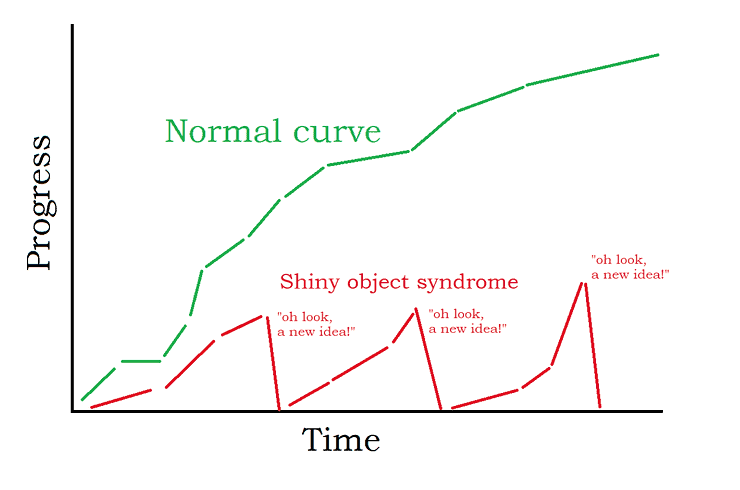
The point of time management is to put your best energy into the things that matter most and bring you the most value. Freeing up more time for small chores misses that point. So before you start working, close your eyes and remind yourself: “Focus on activities that serve my long-term goals, not on a quick sense of accomplishment.” Starting work with that in mind makes it easier to set sensible priorities, and you’ll stop beginning every session with trivial tasks.
Being busy doesn’t mean being efficient or productive. At work, you have to watch out for “fake work” and manage your time around your goals. Avoid spending too much time on “useless work,” and figure out what is “not” a priority. Before you begin, finding your core tasks is important, and so is knowing which work is useless.
I like to handle these important core tasks in the morning, including creative work, strategic thinking and big-picture decisions. Once the hardest work is done in the morning, nothing harder or more stressful is left for the rest of the day.
Execution: Multitasking Makes You Feel Efficient While Doing Less
Another common blind spot is that many people believe they’re good at multitasking, when the truth is often the opposite. When you think you’re getting double the work done, you’re usually getting less done with more effort, because your attention keeps drifting between different things.
For example, I used to keep an iPad next to me playing Netflix while I worked, thinking I could work and relax at the same time. But according to the American Psychological Association’s 2006 research “Multitasking: Switching costs”, frequently switching your attention at work actually lowers efficiency. Each switch may cost relatively little, sometimes just a fraction of a second, but when we keep switching between tasks those costs add up to a lot of time. Multitasking looks efficient on the surface, but it can end up taking more time and causing more mistakes.
That’s why multitasking is the biggest enemy of efficiency. Focusing on one thing instead of splitting your attention across several tasks improves the quality of your work and saves time. When I work, I also try not to listen to Chinese-language songs, so the lyrics don’t pull my thoughts away.
Time Blocks: Separate Creative Work from Busywork
I split my work into two types:
- Creative work: writing, studying and reading, or deep thinking, meetings and brainstorming. This kind of work drains a lot of mental energy, and it can’t be interrupted halfway through.
- Brainless work: writing emails, replying to messages, chatting, checking to-do lists and other small tasks. These can be done quickly without much mental effort, so they fit into scattered pockets of time.
Once you know these two types of work, use time blocks to divide your day and focus on deep work. Time blocking is a very effective time management method: you split the day into several periods and focus each one on a single task, which also keeps you from multitasking.
For example, I give one full time block to creative work (writing, studying and reading) and make sure nothing interrupts me during it and breaks my flow. Shorter blocks, such as 30 minutes or an hour, go to meetings and messages.
This setup lets me focus better on each task and get more done. There’s no fixed rule for how to cut up your time blocks; some people like 30-minute cycles. As long as you separate the two types of work and put the brain-heavy work into a long block where no one will disturb you, your efficiency will go up quickly.
I use Toggl Track to log and track my time blocks. Whenever I want to start deep work, I put my phone on Do Not Disturb and start the Timer in Toggl Track to record the time.

Use Pause Points: Regularly Reassess What Matters
Paying attention to “pause points” is one of the most important parts of good time management. When you finish something, stop and think about what to do next. Keep Shiny Object Syndrome in mind and ask what your real core task is. If you learn to hit pause and take conscious control of your thinking, you avoid detours and save time. For example, the built-in Pomodoro timer in Toggl Track pushes me to rest after a stretch of focused work, step back, and look at the importance and priority of my work from a higher level.
Review Regularly: Get a Sense of Progress
Beyond the ideas and methods above, there’s one more step that matters over the long run: regular reviews. After setting a goal, also set a schedule for checking on it. That makes it easier to notice your growth in a given area, which creates a positive cycle.
For example, I juggle several full-time commitments, so I focus on just one thing for a period of time. On top of my day job and my startup, I spend three months in a row on a single thing: three months learning cloud computing, three months on English interviews and my resume, three months on product management. Once I set a three-month goal for English, I schedule a monthly review to check my progress. Organizing my time this way feels more comfortable to me and lets me grow fast in one area. Because of these regular reviews, I can easily see my growth in that area, which makes me more willing to put time into it.
For my reviews I use the same tool, Toggl Track, to look back at how I spent my time. Toggl syncs across devices (I use it on iPhone, Mac and the Chrome extension), and you can set up Projects to group different work by project. Then the Reports feature lets you review your past time use in one click.

Don’t Lose Sight of the Goal by Chasing Productivity Trends
When we chase efficiency, new productivity methods and tools are easy to get drawn into. YouTube always has new videos about tools that boost efficiency, and there’s no end to people sharing their experiences. We should avoid following trends blindly. Even if the new tools do work, if you already have a productivity tool you’re used to and that works, you don’t need to switch every three or six months.
Finding productivity tools that suit you is a good thing, but they can’t replace the actual work. Keep an eye on how much time you spend “researching” and “using” them. If you spend an hour every day scheduling, logging what you’ve done and setting to-dos, you’ve probably got your priorities backward, and that hour would be better spent on important tasks.
Tools should support you. They can’t replace real effort and execution.
I use one simple app for project management, time tracking and regular reviews, and I sort and prioritize all my tasks in it. There are more powerful tools on the market, but Toggl Track is enough for me (finding a tool you’re comfortable with matters most). When new tools come out, I don’t need to keep switching and waste even more time.

These ideas apply beyond work, to studying, personal growth, exercise and more. Combine them with “beginning with the end in mind” (see: Begin with the End in Mind: A Three-Step Way to Beat Confusion and Find Your Goals) and you can reach your long-term goals faster without drifting off course.
Jason’s Takeaway
I focus on one thing for three months straight and review my progress every month. That makes it easier to notice my growth, and I’m more willing to put in the time.
Jason, who planned his career backward from the goal and landed a Google offer at 24
Next step: Before you start work tomorrow, write down your most important core task and tackle it first thing in the morning.
