
📝 Applications, 🌍 Study Abroad, 📄 Application Essays, 🧑🎓 Study Abroad Interviews
UK Marketing Master’s: Layla’s Path to Bath and Manchester Offers
Updated 2026/10/16
Jason’s Memo
Layla studied Radio and Television, prepared her applications while working full time, and was admitted to Bath’s MSc Marketing and to Manchester’s marketing master’s programs.
- SOP: she wrote about how well she fit the program: the experience she already had, the skills she wanted to build, and the school resources that would help her reach her goals.
- Resume highlights: she reviewed each experience with the STAR method and picked the three things most worth talking about, each tied to a different skill.
- Schedule while working: on weekdays she studied near her office from around 8:30, and from 20:00 to 22:00 she took English classes and worked on her application documents.
Layla’s application story is about preparing while working and switching fields. She majored in Radio and Television, then moved steadily into marketing and digital advertising at work. Roles from Ogilvy to Tagtoo helped her find the direction she cares about most. During her applications she worked as an ad optimization specialist while planning her studies abroad. In the end she received two offers from Manchester and chose Bath’s MSc Marketing as her next step.
If you’re thinking about applying for a Marketing or Digital Marketing master’s in the UK but worry that you don’t have a business background, or that you won’t manage it while working, Layla’s story shows that a background from another field can become a strength.
Layla’s background (LinkedIn: www.linkedin.com/in/layla-hsin-ling-chiang):
National Chengchi University, Department of Radio and Television, GPA: 3.87/4.3
IELTS 7.5
Work Experience:
- Ogilvy PR, summer internship (Public Relations Intern)
- Ogilvy PR, short-term part-time role (Social Team)
- Tagtoo, ad optimization specialist (Senior Optimization Specialist, Digital Advertising)
Other Experience:
- Exchange program at Viadrina University, Germany (focused on international marketing courses)
- NCCU ITLAB, Head of PR (social media management and recruitment event planning)
- NCCU Jinxuan Awards, PR/media team lead
Admissions:
- (Enrolled) University of Bath, MSc Marketing
- University of Manchester, MSc Marketing
- University of Manchester, MSc Digital Marketing
About the University of Bath MSc Marketing
The University of Bath is known for strong research and close ties with industry, and it’s one of the UK’s most popular research universities among international students. Its School of Management ranks among the top business schools worldwide, with a solid industry network and a very high graduate employment rate.

The MSc Marketing (official page) is a one-year, full-time taught program for students who want to combine theory with practice and build real marketing expertise. Core courses include:
- Consumer Behaviour: consumer psychology and decision-making, to help students design more precise marketing strategies.
- Integrated Marketing Management: marketing planning from a strategic perspective, covering how brand, channels and digital media work together.
- Marketing Communications: Strategy and Practice: trains students in brand communication and integrated marketing communications.
- Digital Marketing Society: the challenges and opportunities for marketing as businesses go digital.
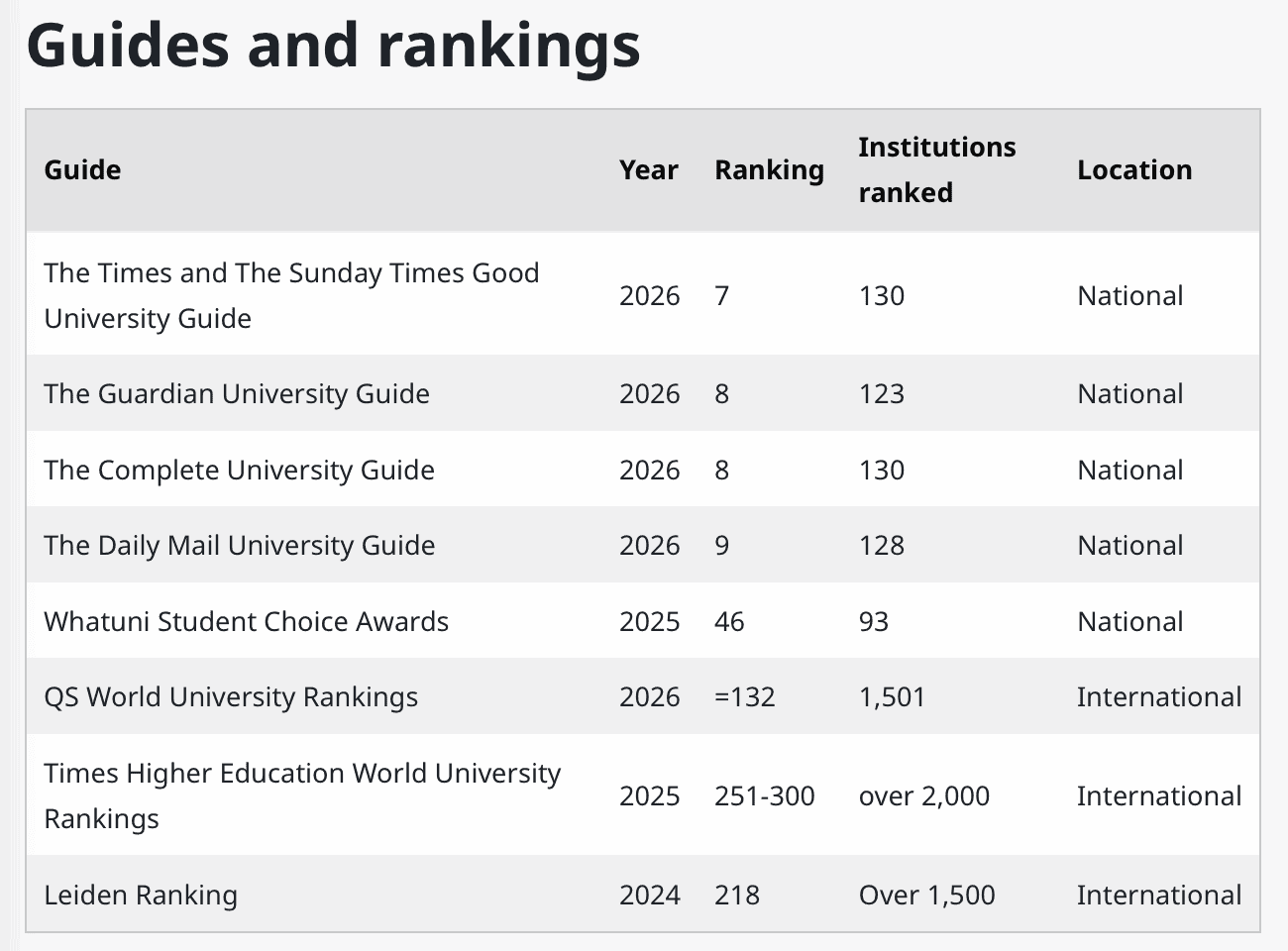
Bath’s MSc Marketing ranked in the global top 50 and the UK top 10 in the 2025 QS Business Masters Rankings. Its marketing program was also ranked first in the UK in the 2026 Complete University Guide.
Career outcomes are strong. According to official figures, 76% of the 2022 and 2023 graduates received job offers within three months of graduating. Most went into marketing and brand roles (72%), at international companies including Dyson, LVMH Group, Mars, Omnicom Media Group and Mulberry England. The program is academically rigorous and closely connected to industry, which suits students who want a marketing career in international markets or who are switching fields.
Switching fields: from broadcasting to marketing, and how her experience became an asset
What made you decide to go into marketing and apply for a master’s abroad?
There wasn’t one decisive moment. It was more that a lot of small decisions led me here. In college, whenever I joined an event I happened to end up on the PR team, so I got to know quite a few friends from the advertising department. NCCU’s College of Communication also lets you choose courses quite freely, so I could take classes leaning toward advertising and marketing. Then a summer internship at an ad agency made me even more sure I was interested in the marketing industry.
Doing a master’s was always part of the plan, partly because of my family (my parents really encouraged me to do it). I didn’t go straight after graduating because I had no clear idea what to study, so I decided to work first. I chose to study abroad because my exchange made me miss living overseas, and I wanted to experience it again through a master’s.
You majored in Radio and Television and took business courses on exchange. How did those experiences shape your choice?
The Radio and Television department has two tracks, “Creative Audiovisual Production” and “Media Innovation and Management”, and I chose Media Innovation and Management. That track includes courses such as Media Content Planning, Film and TV Content Marketing, and Film and TV Production and Distribution, which all touch on marketing to some extent. On exchange I also took courses like Strategic Marketing.
At the time I just picked what I liked. Looking back, those decisions led me quite naturally to where I am now.
In your application essays, how did you connect your experience to Bath’s MSc Marketing?
In my SOP I focused on how well I matched Bath’s MSc Marketing (how good a fit I was for the program). I explained the experience I already had (PR, social media, ad buying), the skills I still wanted to build through the program (marketing analytics, brand marketing and so on), and the school resources that could help me reach my future goals (for example the Practice Track and the many challenges the school runs with companies, which would help me understand the UK market better).
Choosing a school and the final decision: Bath vs. Manchester
What criteria did you use to compare programs?
I read a lot of experiences from students who went to the UK for marketing (YouTube, Medium, Jason’s website, alumni sharing and so on). What I cared about most was budget, student life, the school’s reputation and career resources.
I planned to apply to Bath, Manchester and Warwick (I ended up not applying to Warwick because I already had the Bath offer), and Bath was my first choice.
- Student life: this mattered a lot to me, because choosing a school also meant choosing where I’d live for a year. From my exchange, I knew big cities weren’t really for me. I cared about budget, safety and convenience, so any school that met those points was fine with me.
- Reputation: Bath’s QS ranking may not be as high as some other schools, but it has always stayed in the UK top ten, and its MSc Marketing has a good reputation. I hesitated a bit at first, but honestly QS is just one of many rankings, so I stopped worrying about it. Choosing what I liked mattered more.
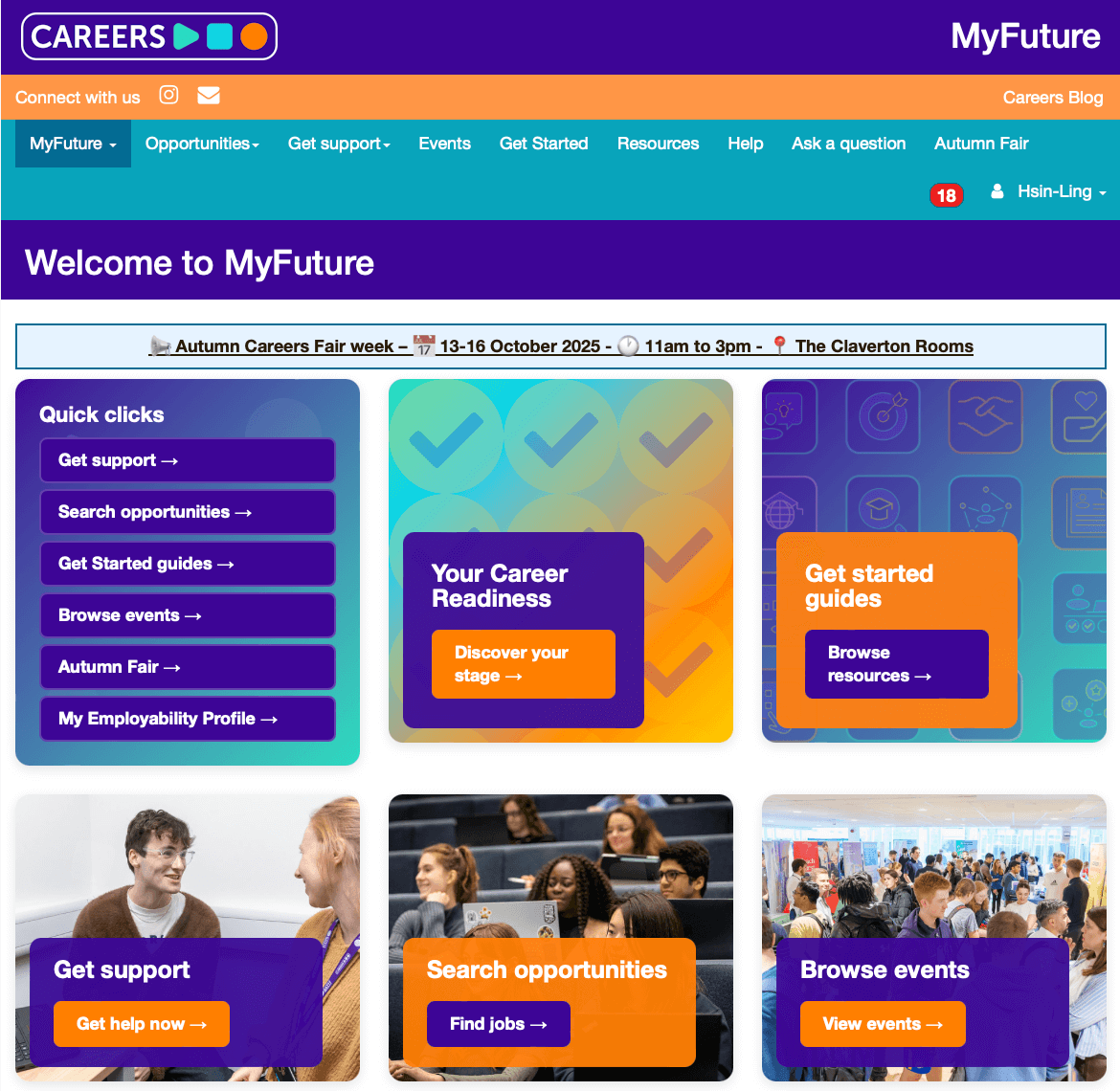
- Career resources: if you want to know more, see this page. The Careers Centre has drop-in support, runs all kinds of workshops (CV, LinkedIn, networking and more) and holds careers fairs. Each department also has its own careers advisor, whom you meet to discuss your career plans. In the first week there’s a session on the UK job search timeline and recruitment process, and the school emails you when applications open for a company’s Graduate Programme. Overall I felt the school was actively helping students with their careers.
You received several offers. What made you choose Bath in the end?
Simply put, I wanted to spend the year living in Bath rather than Manchester. While choosing, I asked several women who had studied at Bath before me about their experience, and they all spoke highly of the city, the course structure and the School of Management’s resources.
I also went through the school’s website carefully to check that the courses covered what I wanted to learn and to see what the careers centre offered. So far Bath has lived up to my expectations (Bath is really beautiful, and daily life is very convenient).
Writing the application: making your story more convincing
When you prepared your SOP or essays, how did you bring in your media and marketing background?
My SOP had two paragraphs, one on my internship and one on my job, and I tried to tie each experience closely to the program’s courses.
At the end of my internship there was a final project where interns from different departments put together an integrated marketing proposal. I wrote that this taught me to communicate and work across departments, and gave me a basic understanding of consumer behavior, market segmentation and social media marketing. In my full-time job I ran ad campaigns, which built my data analysis skills, and talking with clients showed me some of the strategic planning inside brands. All of this made me more certain I wanted to study marketing in depth.
The MSc Marketing covers all of this too (Consumer Behaviour, Marketing Analytics, Integrated Marketing Management, Contemporary Brandscapes and more).
What was the core message you most wanted admissions officers to take from your essays?
Concretely, it was that I had interned at an ad agency and had a year of experience running ad campaigns. Those two points were the most direct proof that I’d been working in marketing.
What I most wanted my SOP to show was how well suited I was to this program. I tried to put the admissions officer right inside the experiences I described, so that anyone reading my application essays could see I had already put work into this field, still fell short in some areas, and really needed this master’s at Bath to reach my goals.
How did you find the highlights in your past work for your resume, and what angle did you use to strengthen your application?
First I listed every event I had organized and every client I had handled. Then I used the STAR method to go through each experience carefully: the difficulty I faced, how I solved it, the result, what I learned and which skills improved.
The first draft was probably a long, scattered list of bullet points (I really wrote down whatever came to mind). Then I laid all the experiences out and picked the three things I thought were most worth expanding on, making sure each one pointed to a different skill. Those became the highlights I could build on.
Applying while working: time management and trade-offs
How did you plan your days and weeks while working full time and preparing your applications? Did you use any tools or methods to be more efficient?
First, start preparing as early as possible so you give yourself enough time.
Here’s my application timeline. If you’re planning to apply, I’d suggest registering for IELTS right away. Once you’ve signed up, you’ll study.
- 2024.06-2024.08: took IELTS
- 2024.09-2024.10: wrote application documents
- 2024.11: received offers
Work was busy and tiring, so it was very easy to slack off. My solution was to fill the time slots where I might slack off before I had the chance. I took about 2-3 online English classes a week, and every class came with homework I had to finish beforehand, no matter what.
My working hours were roughly 10:00-19:00. Overtime was unpredictable, so on weekdays I’d get to a Louisa coffee shop near the office around 8:30 to study (one listening or reading section, plus review). In the evening I’d keep going depending on how tired I was: around 20:00-22:00 I took English classes (speaking/writing) and worked on my application documents. On weekends I slept in, then studied or wrote documents in the afternoon and evening. I liked meeting friends at a café to work together, which kept my mood up.
Mindset: what was the most frustrating moment of the application process, and how did you cope?
Applying while working takes a lot of energy and stamina, and the scariest part was the anxiety and self-doubt. When I was too anxious to focus on studying or writing, I’d listen to a 5-10 minute mindfulness meditation podcast, and it really calmed me down. The other thing is to always make time for exercise, 1-2 days a week, so you have enough energy.
Advice for future applicants
If you could say one thing to your past self, what would it be?
Just take it one step at a time and do each thing well. You can do it!
Layla also shared some information about University of Bath scholarships.
Bath seems fairly generous with scholarships (she hasn’t compared notes with many people), and Layla received £10,000:
Discretionary Scholarship 5000 (awarded automatically with the offer)
Master’s Worldwide Scholarships 5000 (which I applied for)
Jason’s Takeaway
For Layla, the scariest part of applying while working was the anxiety and self-doubt. She listened to 5-10 minute mindfulness meditation podcasts and always made time for exercise.
Jason, admitted to Columbia Business School’s MBA at 22 and founder of OfferLand.cc
Next step: If you plan to apply, register for IELTS first. In Layla’s experience, once you’ve signed up, you’ll study.
