
🧑🎓 Study Abroad Interviews, ☕ Coffee Chat, 🌍 Study Abroad, 🎓 Scholarships, 📄 Application Essays, 📝 Applications
Birmingham Marketing Master’s: How James Won a £10,000 Scholarship
Updated 2026/10/16
Jason’s Memo
With a GPA of 3.37/4.0, James won a £10,000 scholarship from Birmingham through a clear plan for his application documents and by reaching out to people who had gone before him.
- Write your CV first: Its content is fixed, so start there. Once it’s done, use it as a database for your SOP, recommendation letters and scholarship documents.
- Write about the gap in your SOP: Explain what you still lack to reach your career goal, and how the school’s courses, resources and industry links will fill it.
- Use recommendation letters for soft skills: Describe traits your recommender actually observed, such as your role in a team and how you handle challenges.
James won the University of Birmingham Business School’s Dean’s Award for Academic Excellence (£10,000), and his application story is well worth reading. He graduated in Business Administration from Yuan Ze University with a GPA of 3.37/4.0 and took IELTS three times plus one Reading retake. He wasn’t the typical applicant with a shiny résumé, yet he stood out from many competitors through a smart document strategy and good use of resources.
In this interview, James shares how he designed his SOP, CV and recommendation letters to tie his work as a course teaching assistant, his CloudMile internship and his club leadership into one convincing story. He also talks about how he approached the Birmingham scholarship essay, and how he built mentor-mentee connections through OfferLand, ADPList and coffee chats to avoid wasted effort during his application.
If you want help with your study-abroad application through networking or coffee chats, or you’re considering a master’s in marketing or management in the UK and want to understand application essays and scholarship applications in depth, James’s experience is a practical guide worth keeping.
James’s background: (LinkedIn: https://www.linkedin.com/in/chun-chien-ko/)

Yuan Ze University, Department of Business Administration
GPA: 3.37/4.0 (79.52)
IELTS 7.0
Work Experience:
- CloudMile Marketing Intern
- Yuan Ze University, Emerging Market Issues, Teaching Assistant
Other Experience:
- Yuan Ze University Consulting Club, President & HR Team Lead (led consulting projects and career forums)
- Skyline.tw Campus Ambassador (promoted international exchange programs)
- Bank of America conference reception (2025 Asia Tech Conference)
- Yuan Ze University freshman orientation camp, Design Team Lead
Admitted to:
- (Enrolled) University of Birmingham, MSc Strategic Marketing and Consulting
- University of Leeds, MSc Consumer Analytics and Marketing
About the University of Birmingham MSc Strategic Marketing and Consulting
The University of Birmingham is a well-known member of the UK’s Russell Group, and its business school is one of the few in the world with “triple crown” accreditation from AACSB, AMBA and EQUIS. It ranks 76th in the QS World University Rankings 2026, and the High Fliers report, The Graduate Market in 2024, named it the UK university most targeted by top graduate employers (University of Birmingham news story). This gives Birmingham Business School a strong reputation in both academia and industry.
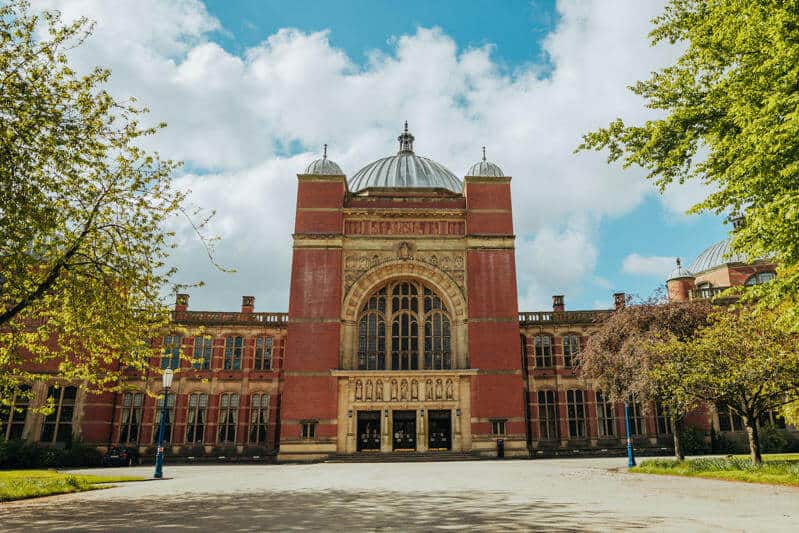
The MSc Strategic Marketing and Consulting (official site) is a one-year, full-time program built around strategic marketing and a consulting mindset. Students learn to draw insights from market data and analysis and build the ability to solve complex business problems. Required courses include Strategic Marketing and Management, Analytical Marketing Insights, Consultancy Skills and Practice, and Digital and Innovative Marketing, and the program puts particular emphasis on the idea of “Responsible Business.” The final Individual Project is where students apply theory to real business cases.
For careers, Birmingham Business School has a wide network of corporate partners and professional resources. Through the careers center, the Careers Network, alumni events and industry projects, students connect directly with consulting firms, multinational consumer goods companies and the tech industry. Common roles for graduates include Marketing Consultant, Brand Manager, Digital Marketing Specialist and Business Analyst, with salaries generally around £30,000 to £40,000 a year (about TWD 1.23 to 1.64 million a year), and more than 90% of graduates are employed within three months of graduating, which shows how well the program connects students to careers.
Overall, Birmingham’s MSc Strategic Marketing and Consulting combines academic rigor, industry links and triple international accreditation. It suits students who want to build a career in marketing and consulting and want hands-on projects and professional resources to sharpen their competitiveness quickly.
Motivation and choosing a program: why marketing and consulting?
What made you choose a career in marketing and consulting? What did you hope to achieve with a UK master’s?
I got into marketing first. My university courses and internships were all marketing-related, and I found I have a mischievous mind. I especially enjoy the satisfaction of using quirky creative ideas to bring an issue to life and seeing more people start paying attention to it. Being able to influence others and drive change confirmed my passion for marketing.
At university I also joined the management consulting club. Talking with consultants from BCG and McKinsey, I saw for the first time what consulting work is worth: it solves problems, and it uses rigorous logic and data analysis to find growth strategies for companies. That problem-solving ability complemented my marketing background, which leaned toward creativity and execution, and I started thinking about how to combine the two.
UK business education offers rich academic resources and an international outlook, and there are many top-100 schools to choose from. My original plan was to stay and work in the UK after graduating, but the job market for international students is changing a lot right now, so I’ve widened my career goals to other European countries or building a career in Asian markets.
So after a gap year following graduation, I decided to apply for a master’s in the UK. It lets me keep pursuing my interest in marketing while building the analytical and problem-solving skills consultants need, so that I can become a marketing consultant who brings both creativity and strategy.
With more than one offer, why did you choose Birmingham’s Strategic Marketing and Consulting (program features or school resources)? And which programs did you apply to?
There wasn’t much information about this program online. I met Jamie on LinkedIn, and only after talking with her did I learn that the Strategic Marketing and Consulting (SM&C) class is tiny! The class of 2026 has only about 20 students, small for a business school, so everyone gets to know each other easily and class discussions feel relaxed. Because the class is small, everyone has plenty of chances to share their ideas.
SM&C also expects applicants to already have a marketing background, so the courses go deeper, combining theory with practice. In the second semester you work on a consulting project with a company (I hear it’s very challenging!). There are also weekly seminars and workshops where you discuss case studies with classmates to reinforce the theory from lectures. Don’t worry if you’re not used to academic papers: the university library offers free writing workshops.
I didn’t choose Leeds’s Consumer Analytics because it focuses heavily on data analysis, which isn’t my strength. Birmingham’s SM&C centers on strategic marketing but still includes a data analysis course, which fills that gap for me.
In the High Fliers 2024 graduate survey, the University of Birmingham was named the UK campus most targeted by employers. Its career service is very active in providing resources, such as CV and cover letter workshops, mock interviews, networking events and mentor programs, as well as connections to consultants who graduated from this program.
Finally, there’s day-to-day life. Birmingham is the UK’s second-largest city and the birthplace of the Industrial Revolution. It sits right in the middle of England, so getting to London or other cities by train is easy. I love the pace of a big city, with everything you need and lots to do (like concerts or the All England Open Badminton Championships). So when choosing schools and programs, look beyond rankings and course resources: location and living environment should count too!
Planning your application documents: let each one tell a different part of the story
In what order did you prepare your CV, SOP and references? When working on several documents at once, how did you keep them consistent but different?
I picture the three documents as concentric circles, expanding outward with me at the center.
- The CV answers “Sir, who are you?” by listing your past experience. Its content is fixed and won’t change much over time, so I start with it. Once the CV is done, it works like a database you can build on for the SOP and references.
- The SOP focuses on the future. It explains why I deserve a place: I still have a gap to close before my long-term career goal, but I know how to close it through the program’s courses, resources and industry connections. This is where you stand out.
- The reference (recommendation letter) adds support from a third-person point of view. It doesn’t go into detailed numbers (the recommender may not know them), but it can highlight my role in a team, my leadership and my sense of responsibility, the soft skills that are hard to claim about yourself in an SOP.
I finish the CV first because it’s the most basic document, and it helps me see which experiences can be expanded in the SOP and which fit better in a reference or scholarship essay. Divided up this way, the documents stay consistent without repeating each other.
When handling several documents at once, I use a small method: I break each experience on my CV into four questions:
What you did → How you did it → What you learned → What you achieved (quantified if possible).
The SOP can focus on what you learned and how it connects to your future goals, while the reference emphasizes how others saw you demonstrate these abilities. That way the three documents echo each other, but each has its own focus.
How did you balance soft and hard skills in your SOP? Which points best showed who you are?
The SOP tells the school “why they should pick you over someone else” (yes, it’s a bit like auditioning).
My approach was to finish a first draft of my CV, pick the few experiences that were most representative or most relevant to the program for the SOP, and then explain:
- What did this experience teach me?
- How did it shape how I picture my future career?
My experience so far is still some way from my ideal career goal (show the gap where it fits), but I know exactly how to use the school’s courses, career resources and industry connections to close it, reach my short- and long-term goals, and eventually make an impact on my industry or society. In effect, you move the reader’s view from the past all the way to the future.
To keep the structure clear, I strongly recommend planning your SOP with a mind map:
👉 What I have now (CV) → What my future goal is (SOP) → What I’m missing (the gap) → How the school’s resources fill it (SOP).
Organized this way, it’s more coherent and you avoid repetition or rambling. Then use ChatGPT to help you rewrite and check it, and each time note what you changed and why. Over time you’ll learn which phrasing and word choices suit you best. Focus on structure first and polish at the end, so each point lands in the right place.
Of course, I made mistakes at first:
- I wrote the SOP I wanted to write instead of the one the school wanted to read.
- I just reworded my CV without saying what those experiences had actually taught me.
So now I often ask myself, “Why am I writing this part?” If the story would still make sense about someone else, it’s too general, and I need to make it more specific and closer to my own experience and career goals. Everyone has internships, clubs and leadership experience. What makes the difference is whether only you could tell this story.
For your references, how did you make sure they highlighted the points you wanted while matching the professor’s or mentor’s tone and style? And how did you make up for a slightly weak GPA of 3.37/4.0 (79.52/100)?
First, confirm whether you’ll draft the letter or the recommender will write it. Once I decided to apply, I settled on my recommenders in early August and sent them drafts by the end of August, before the semester started and professors got busy. I drafted a version so the recommender only had to check it and sign. If the recommender wants to write it themselves, pick someone who knows you well and can tell the story of how you’ve grown, instead of chasing the most senior title. A strong recommendation comes from someone who can clearly explain how this student developed, and a big title doesn’t do that. One more key point: make sure your recommender won’t disappear before the deadline, because some schools wait until all letters arrive before reviewing your application.
Draft the letter in the third person. Instead of piling up numbers, focus on personal qualities the recommender would actually have observed: the role you play in a team, how you respond to challenges, and how you show Leadership, Ownership and Commitment. In my case, I led teammates with no marketing background through a marketing report on a university project, and we got the highest grade in the class. My recommender could describe how I brought together teammates from different backgrounds under time pressure while also handling my club and NGO work. That shows responsibility and commitment beyond the classroom and, to some extent, makes up for a lower GPA.
For me, the reference supplements and echoes the SOP. The SOP covers experience, results and goals, while the recommendation letter reinforces my soft skills from an outside view: communication, leadership, resilience, and how committed I am across different settings. Together they make the whole application more complete and more convincing.
While polishing your essays, you got feedback from several mentors. How did you digest, filter and combine their suggestions? Which advice helped most?
Different mentors pointed in different directions. People without a related background usually gave more general impressions from a reader’s first-impression point of view. Seniors from related programs or fields gave more precise advice on courses, school features, even competitions and resources. And the editor polished my wording and structure so the essay read as more professional and persuasive. Each came at it from a different angle, but together they covered everything.
For example, Stacy, my mentor from OfferLand’s Mantou Program, reminded me that NUS’s MAI program puts special weight on data analysis skills, so my SOP needed to be more specific there. Sean, my mentor from Project Tyra, suggested replacing my cautious opening with a more eye-catching hook in the introduction. In the end I combined their advice: in the first paragraph I laid out my university, internship and consulting club experience, said directly that my goal is to become a marketing consultant, and connected that to the University of Birmingham’s resources. That made the essay more focused and stronger.
My method: first collect every suggestion, then find the problems several people mentioned, then rank them by priority. That keeps you from making a small revision every time feedback arrives and ending up with a messier essay. Honestly, you don’t have to take every suggestion. Sometimes deciding what to leave out matters more.
A small tip: when working with an editor, if I had two or three ways to phrase a sentence, I listed them all, noted why I wrote each one, and asked the editor which worked better. This cuts down a lot of back-and-forth and gets the most out of a limited number of editing rounds.
Applying for a scholarship: from the prompt to using your network
You won Birmingham Business School’s Dean’s Award. How did you choose your angle for the 500-word essay prompt?
I was panicking! (My legs were shaking.) Sustainability was a field I’d never touched, applications were reviewed first come, first served, and I applied late. At that point I’d basically decided to just throw something together and submit it.
Just as I was about to give up, I remembered Allen, an MBA student I’d met at an offer holder event who had also won a scholarship. I swallowed my pride and messaged him to ask if he’d look at my essay, and he agreed right away! Allen taught me an important lesson: an SOP and a scholarship essay aren’t quite the same thing.
- SOP: Who am I? Why do I want to come to this school? Where are my academic potential and research motivation?
- Scholarship essay: Why should the school invest in me? How will I give back to the school and contribute to society in the future?
In other words, the SOP persuades the school to admit you, while the scholarship essay persuades the school that “giving me these resources is worth it, because I’ll multiply their impact.”
Once I understood the difference, I used the Bridge the Gap structure I already knew and wrote the scholarship essay as an upgraded SOP: about becoming someone with real influence in the future, beyond getting admitted.
The second problem: I had no sustainability experience, so how could I be convincing?
At first I thought, “I’m done for, I know nothing about environmental sustainability.” Later I realized my understanding of sustainability was just too narrow: I thought it only meant environmental issues. So I fed my finished CV, SOP and reference into ChatGPT and asked it to analyze where my writing showed abilities related to “responsible business.” It turned out several of my past experiences fit corporate sustainability:
- Leadership experience → maps to DEI (diversity, equity and inclusion). Birmingham Business School values multiculturalism highly.
- Digital marketing and analytics skills → help companies with digital transformation, which can also indirectly encourage lower-carbon behavior.
- The mentor-mentee spirit → make good use of the school’s mentoring resources, then become a mentor and give back to the community.
Also, be specific when you mention school resources! Don’t just write “Career Center.” If you can name specific programs like the “Alumni Leadership Mentoring Program” or the “Future Leadership Certificate,” it shows you understand the business school’s resources much more thoroughly. And if you mention any results in the essay, be sure to quantify them.
By the end I was actually enjoying writing this essay, because I started researching the school’s resources in depth. Every click on the website turned up something new: “Wow, they have this service too!” That feeling of discovery made me imagine all kinds of possibilities for my future.
While writing your scholarship essay, you reached out to alumni and current students for feedback. How did that networking help?
I finished this essay with help from alumni, current students and ChatGPT.
Allen, an alumnus, pointed me to an important idea, the Golden Circle (in Chinese).
- Why → What’s my motivation?
- How → How will I make good use of the school’s resources?
- What → What social impact can I achieve?
He reminded me that everything should start from motivation, and that my plans should be concrete enough to convince professors that “this course is exactly what I need.” I also used LinkedIn to find current Birmingham Business School students, searching for keywords like “Scholarship,” “Future Leaders Certificate” and “Ambassador,” and wrote each of them a personalized message asking them to check whether my essay reflected reality. Only one replied in the end, but that was enough: it kept me from writing things that were pure fantasy.
My biggest takeaway from the whole process: don’t be afraid to ask people for help. I started out thinking I had no chance at all, and the essay only became strong once different people pitched in. At first I felt embarrassed to ask, but I learned that working alone behind closed doors can mean twice the effort for half the result.
Remember: “When you truly want something, the whole universe conspires to help you.” 1+1≥2 (I’m bad at math)
Mentor-mentee resources: coffee chats and the power of community
You often talk about the value of coffee chats. How did you reach out to strangers? Do you have any tips or a message template to share?
Honestly, I was really nervous at first and needed a lot of courage to message strangers. I’d often type a long message, then worry I’d be bothering them and quietly delete it. Then, at an OfferLand talk, I heard Belinda say: when seniors help you, they’re also helping the lost person they once were. That really resonated with me, and reaching out to seniors started to feel more natural.
After that I set myself a mindset: nobody is obliged to help me, so I assume the answer will be no and have no expectations. And if someone says yes, I treat that “yes” as a gift!
My simple template goes roughly like this:
- Introduce yourself (who! I! am! 🗣️)
- Why you’re reaching out to them (for example, they study a program or have experience in an industry related to what you want to explore)
- Make a specific request (for example, a 15-minute online or in-person chat about their course experience or job search…)
- Thank them and stay flexible (something like “Whenever suits you. Thank you so much for your time.”)
What value did mentors from OfferLand’s Mantou Program, ADPList or Project Tyra bring to your application? How would you encourage younger students to use these resources?
Compared with cold-messaging strangers on LinkedIn, OfferLand and Project Tyra are more relevant and focused communities, because the people who join share the idea of giving back. A quick introduction to the three platforms:
- OfferLand Mantou Program A study-abroad community built by Jason and his partners. Through the program I met Stacy from NUS’s MAI, and she then introduced me to Lisa, who studies Finance at KCL in the UK. This kind of compounding network, where someone makes the introduction, saves a lot of the effort of cold outreach and helps you find the right help more precisely.
- Project Tyra Phil, who studies at Duke, recommended it. The platform has a strong mentor-mentee culture and a rich network. I was matched with Sean, a professor from Waseda, who pointed out where the logic in my SOP fell short. That was crucial and very useful.
- ADPList This global platform started in UX and is now used by professionals across every industry, and it’s completely free! With a computer and an internet connection, you can talk with experienced people around the world, whether in management consulting, finance, tech or traditional industries. For students, it’s incredibly good value.
Asking questions is a skill that takes practice too. At first I was lost and didn’t know what counted as the “right question.” But I came to see that there are no stupid questions, and none that can’t be answered (though I’m not encouraging you to expect people to hand you everything 🙃). If something confuses you, it’s worth discussing. Through asking and listening, I gradually learned how mentors think, and even started asking myself, “If I were a mentor one day, how would I answer this?” You get answers, and you also learn how to think.
Advice for future applicants
If you could point out one application detail that’s easy to overlook but really important, what would it be?
If you’re still a student, keep your GPA up, and also get involved in clubs, business competitions, internships, exchanges abroad and so on. These experiences show a well-rounded profile and give you a rich “story bank,” so you have more angles to work with when writing your application.
Also, don’t be afraid to take on leadership roles. Leading a project is stressful, but it’s where you learn the most! Birmingham likes people with leadership qualities (highlight that). And don’t underestimate any project or result you’ve achieved. You might think its impact was small, but it could become a highlight of your application. It’s like Steve Jobs’s Connect the Dots: many experiences eventually link up into your own story.
One last detail people often overlook: take the initiative to set up coffee chats or contact alumni. Many people feel shy, but this often brings the most genuine and varied information. Early in my application, I asked Jessica, who was studying Finance at Warwick, and she laid out the application timeline clearly, which took away a lot of my early anxiety and stress.
In the short term, these conversations help you clarify your direction. In the long term, these people might even become key supporters in your career. Now is a good time to plant those seeds and then watch them grow!
Over the whole application, which step is most worth preparing early to make everything after it easier?
UK applications are reviewed first come, first served, so the earlier you submit, the better your chance of getting a place. I suggest preparing your CV early, because it organizes your past experience and won’t change much, so you can write one version first and then build out from it to your SOP, recommendation letters and even scholarship applications. All of these documents revolve around your past experience. Once your CV is clear, the later writing goes much faster, and you may discover highlights you hadn’t noticed.
Also, if you plan to hire a professional editor overseas, be sure to book early. September and October are peak season for application documents every year, when lots of people look for editors at the same time, so you may wait a long time in the queue and lose time. Starting early will spare you a lot of anxiety!
Jason’s Takeaway
James learned not to be afraid of asking people for help. He had alumni and current students review his scholarship essay, and an essay he’d planned to throw together slowly became a strong one.
Jason, admitted to Columbia Business School’s MBA at 22 and founder of OfferLand.cc
Next step: Use James’s template to write one coffee chat request: introduce yourself, say why you’re contacting them, make a specific request, and end by thanking them.
